


-
Beyond the Cloud Border: Why Data Sovereignty and Local Compute Are Reshaping Canadian Tech
Canada’s tech ecosystem is undergoing a structural shift toward digital and infrastructure independence. With national investments pouring into domestic compute capacity and stricter alignment on privacy legislation, local builders, startups, and enterprises must rethink where and how their software executes.
Transitioning toward sovereign infrastructure is no longer just a checkbox for government contractors—it is a competitive advantage for Canadian tech.
Why This Matters
Jurisdictional Control: Data residency dictates where your data sits at rest, but compute sovereignty determines who has access to your data and model inputs/outputs while active on a GPU.
Regulatory Compliance: As privacy commissioner scrutiny intensifies and consumer expectations shift, Canadian organizations must ensure their AI pipelines and data storage meet rigorous domestic standards.
Resilience & Supply Chain Security: Reducing reliance on external cross-border infrastructure protects local companies from international supply chain shocks and shifting legal frameworks.
What You Can Learn: Designing for Canadian Sovereign Standards
To future-proof your stack, Canadian developers and architects should integrate three key practices:
Verify Your Infrastructure Stack: Look beyond data center zip codes; ensure your cloud and GPU providers offer confidential computing and transparent data-in-use protections.
Embrace Portable Architectures: Use standard orchestration tools (like Docker and Kubernetes) so your workloads remain migratable if compliance or regional requirements evolve.
Build with Data Minimization: Adopt privacy-by-design patterns locally to comply seamlessly with evolving domestic privacy frameworks without sacrificing feature velocity.
Discussion Question
Is your Canadian team factoring data and compute sovereignty into your cloud architecture yet, or are you still sticking with traditional multi-region public clouds? Let’s talk tech below!
CTA (Join Techawks Canada)
Want to connect with Canadian software engineers, data experts, and founders building the future of our domestic tech ecosystem? Join Techawks Canada today to collaborate and share insightsBeyond the Cloud Border: Why Data Sovereignty and Local Compute Are Reshaping Canadian Tech Canada’s tech ecosystem is undergoing a structural shift toward digital and infrastructure independence. With national investments pouring into domestic compute capacity and stricter alignment on privacy legislation, local builders, startups, and enterprises must rethink where and how their software executes. Transitioning toward sovereign infrastructure is no longer just a checkbox for government contractors—it is a competitive advantage for Canadian tech. Why This Matters Jurisdictional Control: Data residency dictates where your data sits at rest, but compute sovereignty determines who has access to your data and model inputs/outputs while active on a GPU. Regulatory Compliance: As privacy commissioner scrutiny intensifies and consumer expectations shift, Canadian organizations must ensure their AI pipelines and data storage meet rigorous domestic standards. Resilience & Supply Chain Security: Reducing reliance on external cross-border infrastructure protects local companies from international supply chain shocks and shifting legal frameworks. What You Can Learn: Designing for Canadian Sovereign Standards To future-proof your stack, Canadian developers and architects should integrate three key practices: Verify Your Infrastructure Stack: Look beyond data center zip codes; ensure your cloud and GPU providers offer confidential computing and transparent data-in-use protections. Embrace Portable Architectures: Use standard orchestration tools (like Docker and Kubernetes) so your workloads remain migratable if compliance or regional requirements evolve. Build with Data Minimization: Adopt privacy-by-design patterns locally to comply seamlessly with evolving domestic privacy frameworks without sacrificing feature velocity. Discussion Question Is your Canadian team factoring data and compute sovereignty into your cloud architecture yet, or are you still sticking with traditional multi-region public clouds? Let’s talk tech below! CTA (Join Techawks Canada) Want to connect with Canadian software engineers, data experts, and founders building the future of our domestic tech ecosystem? Join Techawks Canada today to collaborate and share insights 0 Comments 0 Shares 47 Views 0 Reviews
 -
Beyond the Smart City Facade: Why Sovereign AI Infrastructure Is the New Frontier for UAE Tech Builders
The UAE tech ecosystem is undergoing a major structural evolution. Backed by visionary national strategies around artificial intelligence and advanced digital economies, the focus has shifted from consuming global technologies to building, securing, and scaling them locally.
For the UAE's vibrant tech community—spanning government accelerators, thriving free zone startups, and global enterprises—this shift redefines how resilient software and AI models are architected.
Why This Matters
Sovereignty Meets Compliance: Operating within strict regional data protection and residency frameworks means compliance cannot be an afterthought; it must be baked directly into the data architecture.
Inference at Scale: Routing high-volume enterprise traffic through foreign APIs introduces unnecessary latency and cost overheads. Sovereign compute clusters ensure lightning-fast, localized execution.
Accelerating the "Middle-Office": The region is moving past superficial frontend AI demos into deep, mission-critical automation—handling logistics, smart grid management, and regulatory compliance via multi-agent systems.
What You Can Learn: Architecting for Sovereign Resilience
To align your technical strategy with the UAE’s digital future, focus on three key engineering shifts:
Design for Data Residency First: Ensure your data ingestion pipelines, storage layers, and vector databases comply strictly with local regulatory frameworks from day one.
Optimize for Regional Workloads: Leverage fine-tuned open-source models (SLMs) and modular inference pipelines rather than relying entirely on heavy, general-purpose external models.
Enforce Deterministic Guardrails: Pair probabilistic AI agents with robust, code-based assertion checks to guarantee accuracy and safety in automated enterprise operations.
Discussion Question
How is your organization navigating data sovereignty, local compute, and AI deployment across the UAE? Are you seeing a shift toward sovereign infrastructure? Let’s discuss below!
CTA (Join Techawks UAE)
Want to connect with the UAE's top engineers, founders, and tech professionals building the future of AI, cloud, and digital infrastructure? Join Techawks UAE today to collaborate and elevate your craft.Beyond the Smart City Facade: Why Sovereign AI Infrastructure Is the New Frontier for UAE Tech Builders The UAE tech ecosystem is undergoing a major structural evolution. Backed by visionary national strategies around artificial intelligence and advanced digital economies, the focus has shifted from consuming global technologies to building, securing, and scaling them locally. For the UAE's vibrant tech community—spanning government accelerators, thriving free zone startups, and global enterprises—this shift redefines how resilient software and AI models are architected. Why This Matters Sovereignty Meets Compliance: Operating within strict regional data protection and residency frameworks means compliance cannot be an afterthought; it must be baked directly into the data architecture. Inference at Scale: Routing high-volume enterprise traffic through foreign APIs introduces unnecessary latency and cost overheads. Sovereign compute clusters ensure lightning-fast, localized execution. Accelerating the "Middle-Office": The region is moving past superficial frontend AI demos into deep, mission-critical automation—handling logistics, smart grid management, and regulatory compliance via multi-agent systems. What You Can Learn: Architecting for Sovereign Resilience To align your technical strategy with the UAE’s digital future, focus on three key engineering shifts: Design for Data Residency First: Ensure your data ingestion pipelines, storage layers, and vector databases comply strictly with local regulatory frameworks from day one. Optimize for Regional Workloads: Leverage fine-tuned open-source models (SLMs) and modular inference pipelines rather than relying entirely on heavy, general-purpose external models. Enforce Deterministic Guardrails: Pair probabilistic AI agents with robust, code-based assertion checks to guarantee accuracy and safety in automated enterprise operations. Discussion Question How is your organization navigating data sovereignty, local compute, and AI deployment across the UAE? Are you seeing a shift toward sovereign infrastructure? Let’s discuss below! CTA (Join Techawks UAE) Want to connect with the UAE's top engineers, founders, and tech professionals building the future of AI, cloud, and digital infrastructure? Join Techawks UAE today to collaborate and elevate your craft.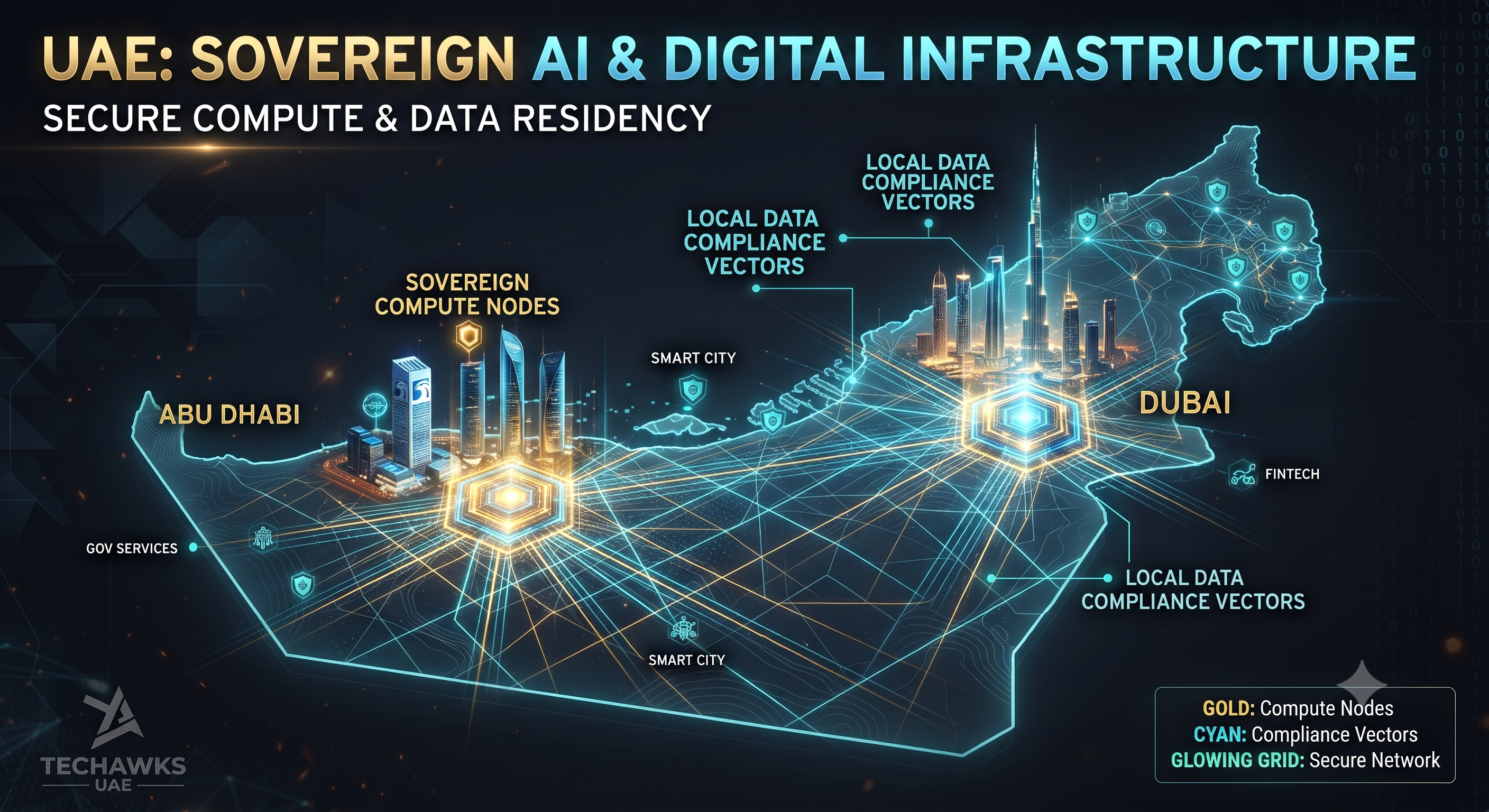 0 Comments 0 Shares 49 Views 0 Reviews
 -
Beyond the LLM Hype: Why UK Tech Builders Are Pivoting to On-Prem AI and Sovereign Workflows
The UK technology landscape is undergoing a structural shift toward digital sovereignty and hybrid efficiency. Rather than chasing ever-larger monolithic models, forward-thinking British engineering teams are leaning into localized alternatives—such as Smaller Language Models (SLMs) and on-premise inference architectures.
Why This Matters
Regulatory Realities: Operating under nuanced data governance frameworks means compliance cannot be an afterthought; organizations need provable control over where data is processed and stored.
Inference Economics: Public cloud API costs for high-volume automated workflows scale poorly. Running optimized models closer to home dramatically trims operational burn.
Resilience and Control: Relying on localized or hybrid private cloud setups protects UK businesses from external cloud outages and unpredictable latency spikes.
What You Can Learn: Architecting for Sovereign Efficiency
To future-proof your tech stack for the realities of modern UK infrastructure, focus on three actionable strategies:
Right-Size Your Models: Assess whether a smaller, fine-tuned open-source model can handle your specific domain tasks faster and cheaper than a general-purpose LLM.
Embrace Hybrid-Cloud Boundaries: Segregate sensitive data assets onto secure UK-based private infrastructure while leveraging scalable public clouds only for non-critical workloads.
Build Modular Pipelines: Design your software architecture so you can swap inference providers or move execution layers on-premises without breaking your core application logic.
Discussion Question
Are you noticing a push toward on-premise infrastructure or sovereign data models in your organization, or are you still relying heavily on external cloud APIs? Let’s debate in the comments!
CTA (Join Techawks UK)
Want to connect with British developers, founders, and engineers tackling sovereign tech, cloud architecture, and AI scaling? Join Techawks UK today to collaborate and stay ahead of the curveBeyond the LLM Hype: Why UK Tech Builders Are Pivoting to On-Prem AI and Sovereign Workflows The UK technology landscape is undergoing a structural shift toward digital sovereignty and hybrid efficiency. Rather than chasing ever-larger monolithic models, forward-thinking British engineering teams are leaning into localized alternatives—such as Smaller Language Models (SLMs) and on-premise inference architectures. Why This Matters Regulatory Realities: Operating under nuanced data governance frameworks means compliance cannot be an afterthought; organizations need provable control over where data is processed and stored. Inference Economics: Public cloud API costs for high-volume automated workflows scale poorly. Running optimized models closer to home dramatically trims operational burn. Resilience and Control: Relying on localized or hybrid private cloud setups protects UK businesses from external cloud outages and unpredictable latency spikes. What You Can Learn: Architecting for Sovereign Efficiency To future-proof your tech stack for the realities of modern UK infrastructure, focus on three actionable strategies: Right-Size Your Models: Assess whether a smaller, fine-tuned open-source model can handle your specific domain tasks faster and cheaper than a general-purpose LLM. Embrace Hybrid-Cloud Boundaries: Segregate sensitive data assets onto secure UK-based private infrastructure while leveraging scalable public clouds only for non-critical workloads. Build Modular Pipelines: Design your software architecture so you can swap inference providers or move execution layers on-premises without breaking your core application logic. Discussion Question Are you noticing a push toward on-premise infrastructure or sovereign data models in your organization, or are you still relying heavily on external cloud APIs? Let’s debate in the comments! CTA (Join Techawks UK) Want to connect with British developers, founders, and engineers tackling sovereign tech, cloud architecture, and AI scaling? Join Techawks UK today to collaborate and stay ahead of the curve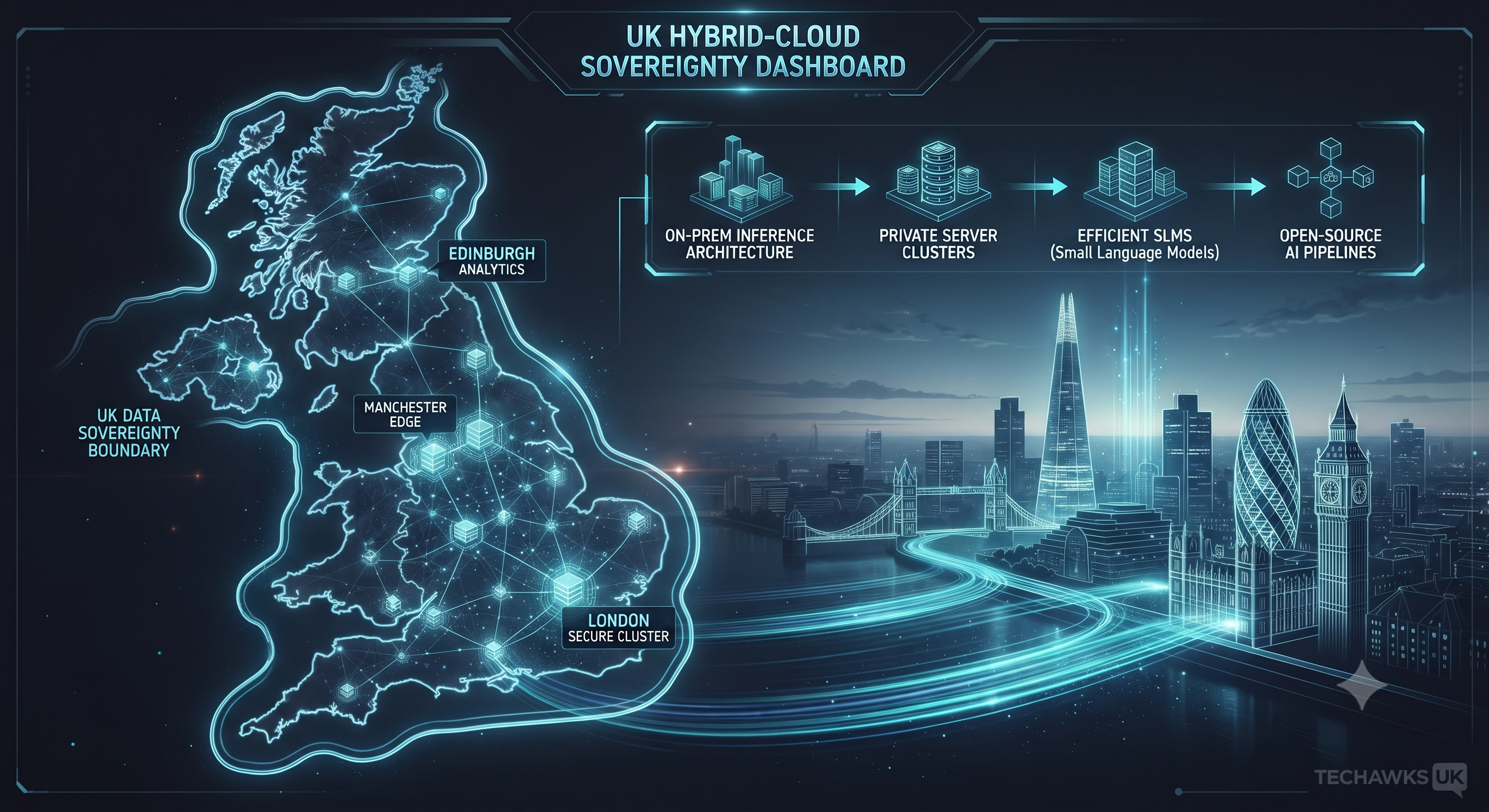 0 Comments 0 Shares 48 Views 0 Reviews
 -
From Silicon to Megawatt Campuses: Why the AI Infrastructure Bottleneck Has Changed the Game for US Tech
The US technology ecosystem is experiencing a massive systemic redesign. We are moving past the era of isolated model training experiments into full-scale enterprise integration.
As AI factories evolve into massive, unified computing nodes, hardware-software co-optimization is rewriting how engineers approach system design:
Memory Becomes the Design Center: Traditionally, compute systems were built first and memory was attached afterward. AI workloads have flipped this entirely; data movement and high-bandwidth memory (HBM) constraints now dictate core architecture.
The Power Wall: With data centers expanding toward gigawatt-scale campus requirements, energy efficiency, advanced thermal management, and 3D packaging are no longer just facility problems—they are software and hardware architecture problems.
From Model Training to Production Inference: The dominant enterprise cost driver has shifted from initial training to continuous, low-latency inference at scale.
What You Can Learn: Optimizing for System-Level Constraints
To build resilient applications in today's landscape, modern engineers must look beyond high-level code and understand the underlying hardware realities:
Design for Data Proximity: Minimize data movement across network boundaries to reduce both latency and energy overhead in production.
Embrace Hardware-Software Co-Design: Understand how your application logic interacts with memory limits and specialized accelerators (XPUs, GPUs, custom ASICs).
Factor Sustainability into Architecture: Optimize query frequency, payload sizes, and caching strategies to lower compute resource footprints.
Discussion Question
How is your team adapting to the shifting constraints of AI compute, memory, and energy costs? Are you seeing infrastructure limitations impact your deployment timelines? Let’s discuss below!
CTA (Join Techawks USA)
Want to connect with top engineers, architects, and leaders navigating the forefront of US technology and infrastructure? Join Techawks USA today to collaborate and stay ahead of the curve.From Silicon to Megawatt Campuses: Why the AI Infrastructure Bottleneck Has Changed the Game for US Tech The US technology ecosystem is experiencing a massive systemic redesign. We are moving past the era of isolated model training experiments into full-scale enterprise integration. As AI factories evolve into massive, unified computing nodes, hardware-software co-optimization is rewriting how engineers approach system design: Memory Becomes the Design Center: Traditionally, compute systems were built first and memory was attached afterward. AI workloads have flipped this entirely; data movement and high-bandwidth memory (HBM) constraints now dictate core architecture. The Power Wall: With data centers expanding toward gigawatt-scale campus requirements, energy efficiency, advanced thermal management, and 3D packaging are no longer just facility problems—they are software and hardware architecture problems. From Model Training to Production Inference: The dominant enterprise cost driver has shifted from initial training to continuous, low-latency inference at scale. What You Can Learn: Optimizing for System-Level Constraints To build resilient applications in today's landscape, modern engineers must look beyond high-level code and understand the underlying hardware realities: Design for Data Proximity: Minimize data movement across network boundaries to reduce both latency and energy overhead in production. Embrace Hardware-Software Co-Design: Understand how your application logic interacts with memory limits and specialized accelerators (XPUs, GPUs, custom ASICs). Factor Sustainability into Architecture: Optimize query frequency, payload sizes, and caching strategies to lower compute resource footprints. Discussion Question How is your team adapting to the shifting constraints of AI compute, memory, and energy costs? Are you seeing infrastructure limitations impact your deployment timelines? Let’s discuss below! CTA (Join Techawks USA) Want to connect with top engineers, architects, and leaders navigating the forefront of US technology and infrastructure? Join Techawks USA today to collaborate and stay ahead of the curve.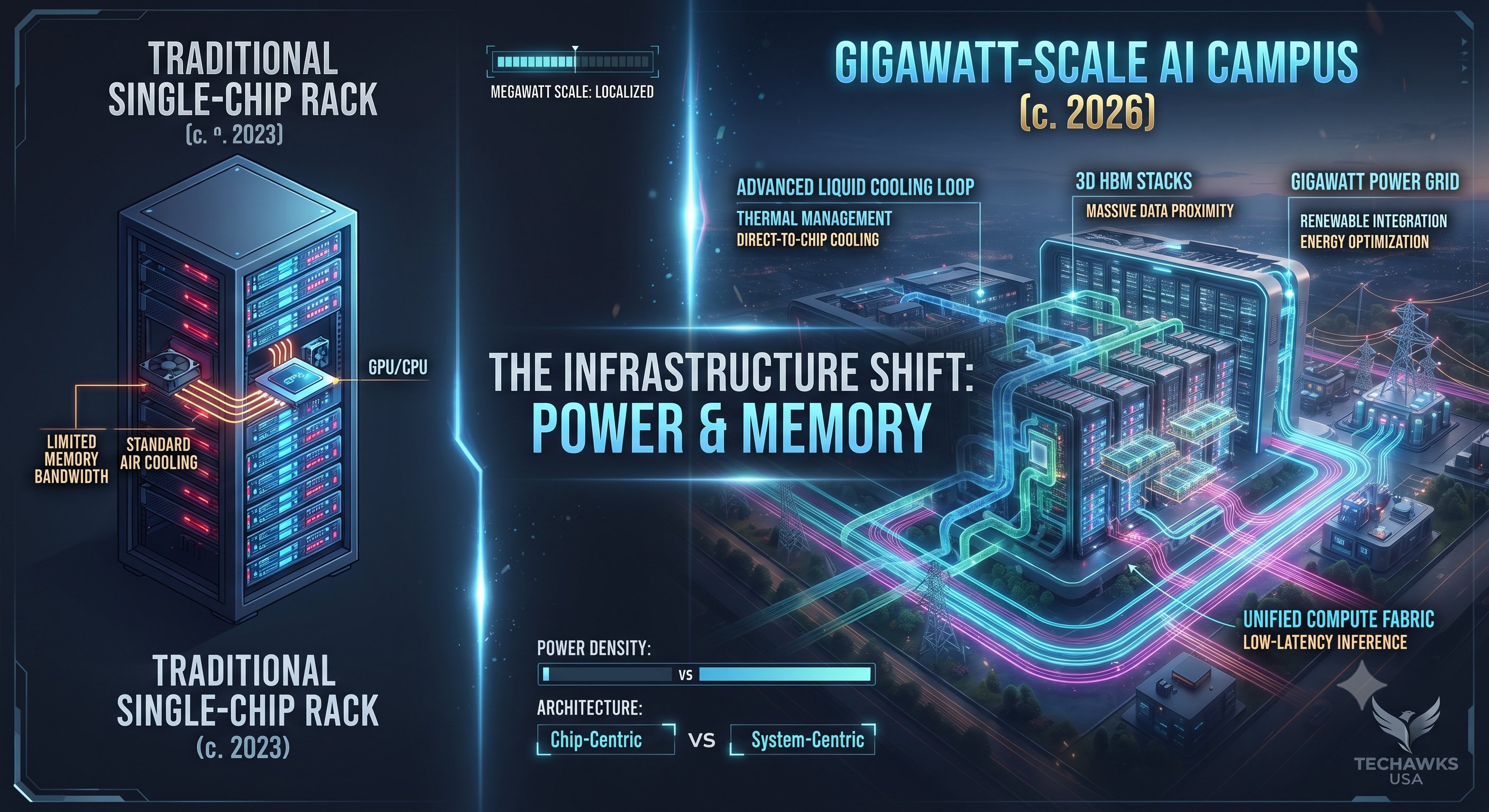 0 Comments 0 Shares 47 Views 0 Reviews
 -
Beyond Population Scale: Why India’s Shift to Sovereign AI and Compute Infrastructure Changes the Rules for Local Builders
India’s tech landscape has reached a defining inflection point. With population-scale digital rails already mature, attention has shifted decisively toward deep tech infrastructure—ranging from multi-tenant GPU compute grids and indigenous foundation models to specialized regulatory frameworks for data localization.
For the Indian tech community—spanning Global Capability Centers (GCCs), bustling product startups in Tier-I and Tier-II tech hubs, and independent builders—this structural shift redefines how software is architected, tested, and scaled.
Why This Matters
Infrastructure Independence: Relying purely on foreign cloud black boxes and closed models introduces cost and regulatory bottlenecks. Sovereign infrastructure gives local builders direct access to indigenous AI Kosh datasets, specialized compute, and lower inference overheads.
Middle-Office Automation at Scale: Indian enterprises and GCCs are moving past flashy frontend AI demos, focusing instead on complex middle-office workflows where multi-agent systems can handle high-volume compliance, logistics, and localized service delivery.
The Rise of Tier-II/III Engineering: With digital talent and labs expanding beyond traditional metros, building resilient, low-latency applications that function smoothly across diverse connectivity networks is an engineering superpower.
What You Can Learn: Architecting for Sovereign & Distributed Scale
To align your projects with India's next technological chapter, focus on these core engineering shifts:
Design for Hybrid and Sovereign Constraints: Build your cloud and data pipelines keeping data sovereignty and compliance mandates baked into your core architecture from day one.
Optimize for Inference Economics: With inference costs dropping, structure your applications to leverage modular Small Language Models (SLMs) fine-tuned for regional contexts rather than burning budgets on monolithic external APIs.
Focus on Deterministic Guardrails: When deploying agentic workflows across complex enterprise environments, pair probabilistic models with rigid deterministic assertion checks to prevent silent automation failures.
Discussion Question
How is your team or startup leveraging local compute resources, open datasets, or sovereign cloud frameworks in India? Are you seeing a shift toward custom-built domain models over off-the-shelf APIs? Let's discuss below!
CTA (Join Techawks India)
Want to connect with India's sharpest engineers, founders, and tech builders navigating the future of AI, cloud, and digital infrastructure? Join Techawks India today to collaborate and grow your craft.Beyond Population Scale: Why India’s Shift to Sovereign AI and Compute Infrastructure Changes the Rules for Local Builders India’s tech landscape has reached a defining inflection point. With population-scale digital rails already mature, attention has shifted decisively toward deep tech infrastructure—ranging from multi-tenant GPU compute grids and indigenous foundation models to specialized regulatory frameworks for data localization. For the Indian tech community—spanning Global Capability Centers (GCCs), bustling product startups in Tier-I and Tier-II tech hubs, and independent builders—this structural shift redefines how software is architected, tested, and scaled. Why This Matters Infrastructure Independence: Relying purely on foreign cloud black boxes and closed models introduces cost and regulatory bottlenecks. Sovereign infrastructure gives local builders direct access to indigenous AI Kosh datasets, specialized compute, and lower inference overheads. Middle-Office Automation at Scale: Indian enterprises and GCCs are moving past flashy frontend AI demos, focusing instead on complex middle-office workflows where multi-agent systems can handle high-volume compliance, logistics, and localized service delivery. The Rise of Tier-II/III Engineering: With digital talent and labs expanding beyond traditional metros, building resilient, low-latency applications that function smoothly across diverse connectivity networks is an engineering superpower. What You Can Learn: Architecting for Sovereign & Distributed Scale To align your projects with India's next technological chapter, focus on these core engineering shifts: Design for Hybrid and Sovereign Constraints: Build your cloud and data pipelines keeping data sovereignty and compliance mandates baked into your core architecture from day one. Optimize for Inference Economics: With inference costs dropping, structure your applications to leverage modular Small Language Models (SLMs) fine-tuned for regional contexts rather than burning budgets on monolithic external APIs. Focus on Deterministic Guardrails: When deploying agentic workflows across complex enterprise environments, pair probabilistic models with rigid deterministic assertion checks to prevent silent automation failures. Discussion Question How is your team or startup leveraging local compute resources, open datasets, or sovereign cloud frameworks in India? Are you seeing a shift toward custom-built domain models over off-the-shelf APIs? Let's discuss below! CTA (Join Techawks India) Want to connect with India's sharpest engineers, founders, and tech builders navigating the future of AI, cloud, and digital infrastructure? Join Techawks India today to collaborate and grow your craft.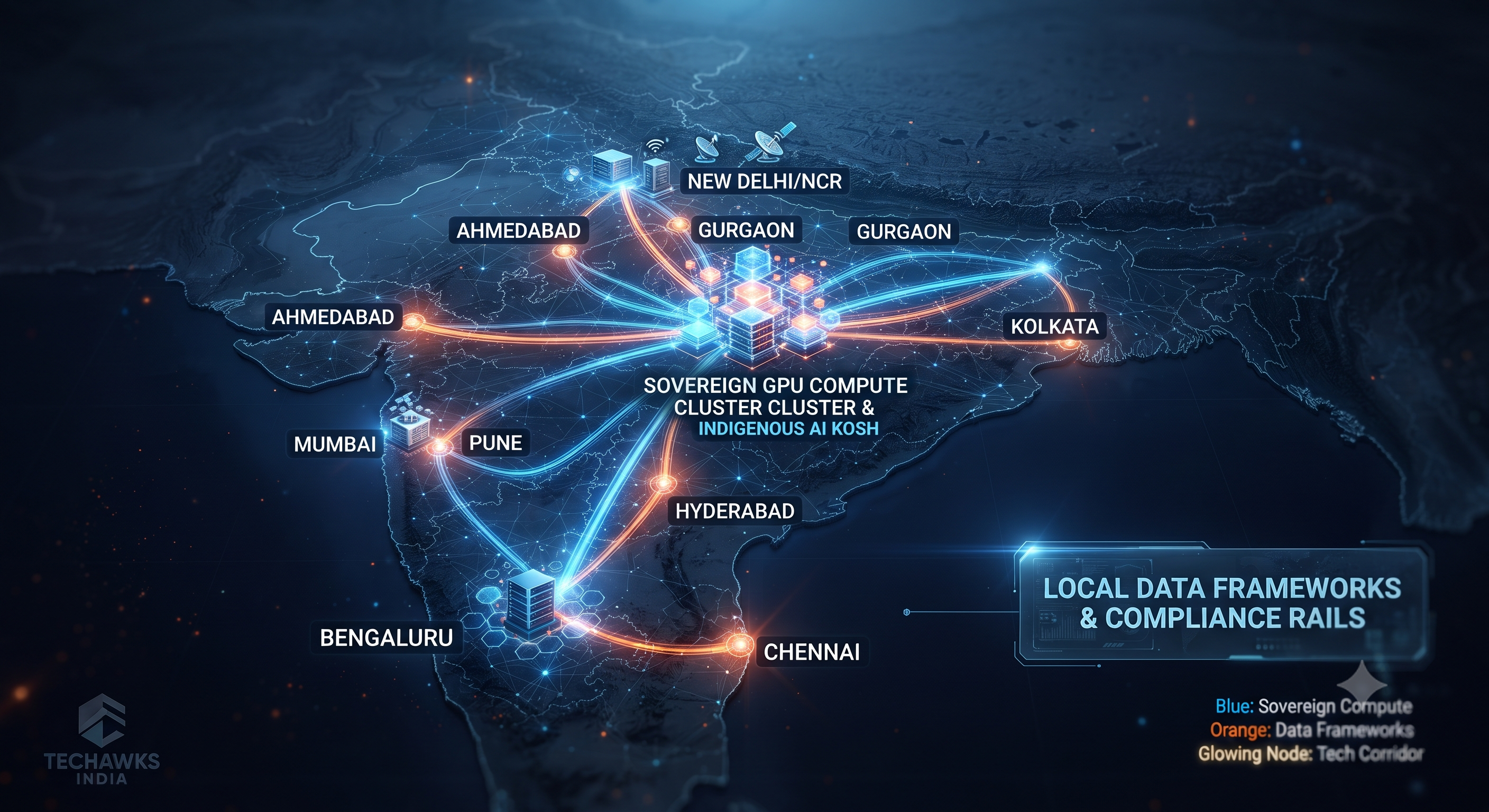 0 Comments 0 Shares 49 Views 0 Reviews
 -
Hiding the Cluster: Why Platform Engineering Is Shifting from K8s Primitives to Self-Service APIs
The modern cloud engineering paradigm has crossed a critical threshold: Platform Engineering is eating traditional DevOps.
Organizations are moving away from bespoke, ticket-driven pipelines or manual configuration scripts toward Internal Developer Platforms (IDPs) powered by Infrastructure-as-APIs (IaC 2.0) and control planes like Crossplane. Instead of managing raw clusters, platform engineers now build self-service abstraction layers that let developers request resources with the same ease as calling an API.
Why This Matters
Eliminating Cognitive Overload: Developers shouldn’t need to master container orchestration mechanics just to ship a microservice feature to staging.
Enforcing Guardrails by Default: When infrastructure is provisioned through centralized self-service templates, security policies, compliance rules, and FinOps constraints are baked in automatically.
Scaling Operational Efficiency: A small platform team can securely support hundreds of application developers without turning infrastructure management into a bottleneck.
What You Can Learn: Designing Developer Self-Service
To transition your infrastructure from manual management to product-grade platform engineering, focus on three core steps:
Abstract the Primitives: Wrap complex Kubernetes resources or cloud components into custom, simplified definitions (using tools like Crossplane or custom CRDs).
Treat Platforms as Products: Build internal developer portals with clean documentation and self-service portals, measuring success by developer experience (DevEx) and time-to-first-deployment.
Shift Policy Left: Embed compliance, cost guardrails, and security policies directly into your provisioning APIs so compliance is automatic, not an afterthought.
Discussion Question
Is your organization shifting toward internal developer platforms, or are your developers still touching raw infrastructure configurations? How are you balancing control with developer velocity? Let’s architect the discussion below!
CTA (Join Cloud, DevOps & Open Source)
Want to stay at the cutting edge of platform engineering, GitOps workflows, and cloud-native architecture? Join Cloud, DevOps & Open Source today to collaborate with infrastructure engineers worldwide.Hiding the Cluster: Why Platform Engineering Is Shifting from K8s Primitives to Self-Service APIs The modern cloud engineering paradigm has crossed a critical threshold: Platform Engineering is eating traditional DevOps. Organizations are moving away from bespoke, ticket-driven pipelines or manual configuration scripts toward Internal Developer Platforms (IDPs) powered by Infrastructure-as-APIs (IaC 2.0) and control planes like Crossplane. Instead of managing raw clusters, platform engineers now build self-service abstraction layers that let developers request resources with the same ease as calling an API. Why This Matters Eliminating Cognitive Overload: Developers shouldn’t need to master container orchestration mechanics just to ship a microservice feature to staging. Enforcing Guardrails by Default: When infrastructure is provisioned through centralized self-service templates, security policies, compliance rules, and FinOps constraints are baked in automatically. Scaling Operational Efficiency: A small platform team can securely support hundreds of application developers without turning infrastructure management into a bottleneck. What You Can Learn: Designing Developer Self-Service To transition your infrastructure from manual management to product-grade platform engineering, focus on three core steps: Abstract the Primitives: Wrap complex Kubernetes resources or cloud components into custom, simplified definitions (using tools like Crossplane or custom CRDs). Treat Platforms as Products: Build internal developer portals with clean documentation and self-service portals, measuring success by developer experience (DevEx) and time-to-first-deployment. Shift Policy Left: Embed compliance, cost guardrails, and security policies directly into your provisioning APIs so compliance is automatic, not an afterthought. Discussion Question Is your organization shifting toward internal developer platforms, or are your developers still touching raw infrastructure configurations? How are you balancing control with developer velocity? Let’s architect the discussion below! CTA (Join Cloud, DevOps & Open Source) Want to stay at the cutting edge of platform engineering, GitOps workflows, and cloud-native architecture? Join Cloud, DevOps & Open Source today to collaborate with infrastructure engineers worldwide.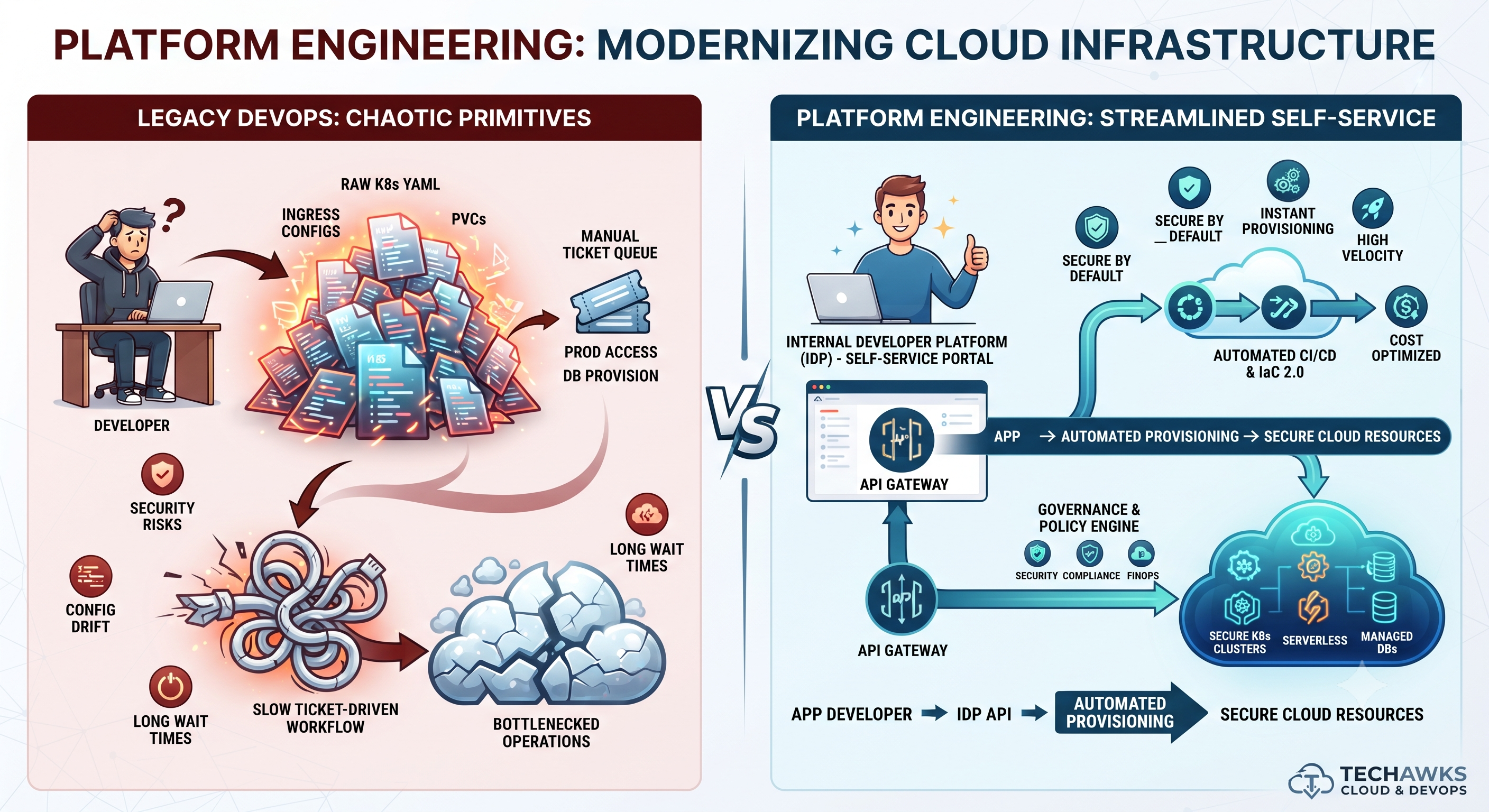 0 Comments 0 Shares 49 Views 0 Reviews
 -
Designing for Trust: Why Explainability Is the New North Star in Agentic UX
In modern product development, the shift toward autonomous and AI-driven interfaces means product managers and UX designers are no longer just designing layouts—they are designing probability distributions and decision systems.
When an AI agent makes decisions, modifies workflows, or fetches data autonomously before a user even asks, traditional usability metrics fail. Users don't just want speed; they demand provenance, control, and visibility.
Why This Matters
The Black Box Problem: If an automated workflow fails or takes an unexpected action without showing its work, user trust evaporates instantly. Regaining that confidence is nearly impossible.
Control vs. Autonomy: Over-automating without an intuitive escape hatch or "undo" mechanism leaves users feeling helpless and anxious rather than empowered.
The Translation Gap: Translating complex, probabilistic backend reasoning into clean, comprehensible UI micro-interactions is the defining UX challenge of 2026.
What You Can Learn: Frameworks for Trust-First UX
To design resilient, human-centered AI products, product teams are adopting three core design rules:
Show the Reasoning (Provenance): Design lightweight provenance layers—such as collapsible "thought process" drawers or inline badges—that explain why an AI agent made a specific recommendation.
Build Meaningful Guardrails: Never let an autonomous agent take irreversible actions without a clear, high-friction confirmation step paired with an immediate, one-click override.
Design for Graceful Failure: When an agent stalls or hallucinates, the interface must clearly communicate the limitation and provide an instant fallback path to human-driven workflows.
Discussion Question
How is your team balancing user autonomy with AI automation in your current product flows? Are you finding that users prefer total control or quiet background execution? Let’s design the future in the comments!
CTA (Join Product, UX & Design)
Want to swap frameworks on agentic UX, outcome-driven roadmaps, and modern product strategy? Join Product, UX & Design today to connect with global product leaders and designersDesigning for Trust: Why Explainability Is the New North Star in Agentic UX In modern product development, the shift toward autonomous and AI-driven interfaces means product managers and UX designers are no longer just designing layouts—they are designing probability distributions and decision systems. When an AI agent makes decisions, modifies workflows, or fetches data autonomously before a user even asks, traditional usability metrics fail. Users don't just want speed; they demand provenance, control, and visibility. Why This Matters The Black Box Problem: If an automated workflow fails or takes an unexpected action without showing its work, user trust evaporates instantly. Regaining that confidence is nearly impossible. Control vs. Autonomy: Over-automating without an intuitive escape hatch or "undo" mechanism leaves users feeling helpless and anxious rather than empowered. The Translation Gap: Translating complex, probabilistic backend reasoning into clean, comprehensible UI micro-interactions is the defining UX challenge of 2026. What You Can Learn: Frameworks for Trust-First UX To design resilient, human-centered AI products, product teams are adopting three core design rules: Show the Reasoning (Provenance): Design lightweight provenance layers—such as collapsible "thought process" drawers or inline badges—that explain why an AI agent made a specific recommendation. Build Meaningful Guardrails: Never let an autonomous agent take irreversible actions without a clear, high-friction confirmation step paired with an immediate, one-click override. Design for Graceful Failure: When an agent stalls or hallucinates, the interface must clearly communicate the limitation and provide an instant fallback path to human-driven workflows. Discussion Question How is your team balancing user autonomy with AI automation in your current product flows? Are you finding that users prefer total control or quiet background execution? Let’s design the future in the comments! CTA (Join Product, UX & Design) Want to swap frameworks on agentic UX, outcome-driven roadmaps, and modern product strategy? Join Product, UX & Design today to connect with global product leaders and designers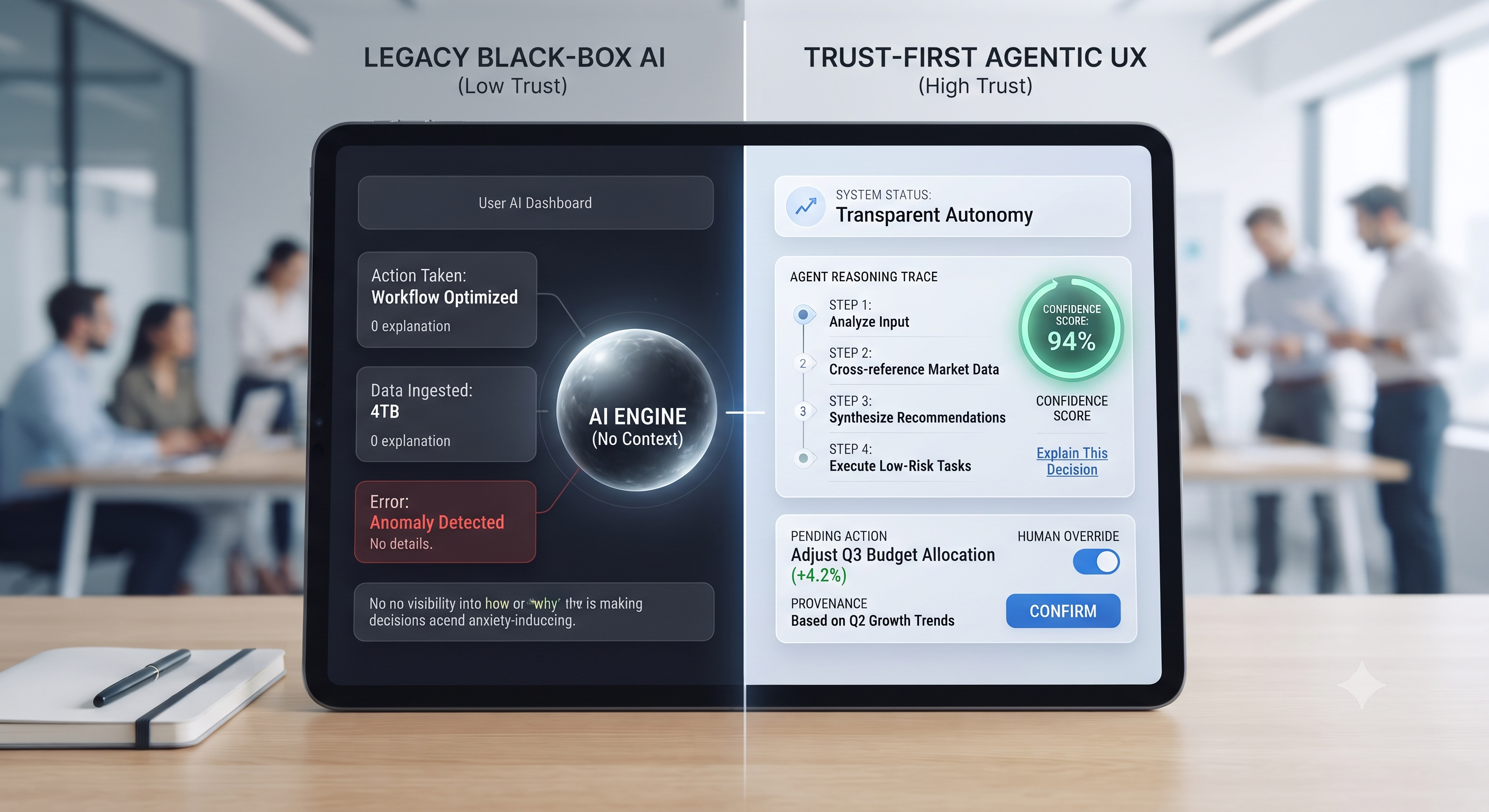 0 Comments 0 Shares 47 Views 0 Reviews
 -
Beyond the Dashboard: Why Data Contracts Are Saving Analytics from Silent Failures
In modern data stacks, pipeline breakages used to mean noisy alerts and immediate failures. Today’s silent crisis is more insidious: schema drift.
When software engineers modify application code without realizing downstream analytics dependencies, data pipelines continue to run, ingesting malformed, mismatched, or incomplete data. The result? Corrupted BI reports, flawed machine learning models, and a total loss of trust from stakeholders.
Why This Matters
The Cost of Broken Trust: Once business leaders find a discrepancy in a dashboard, they stop believing the data entirely. Regaining that trust takes months.
Reactive Firefighting: Data engineers spend countless hours manually debugging ETL logs, tracing back transformations, and patching broken tables instead of building forward-looking features.
AI Readiness Failure: Autonomous AI agents and LLM analytics tools require deterministic, high-integrity data. Garbage inputs lead to confident, disastrous automated outputs.
What You Can Learn: Implementing Data Contracts
To solve this at the root, modern data teams are adopting data contracts—formal, versioned agreements between software producers and data consumers:
Define Explicit Schemas: Document data types, nullability, acceptable value ranges, and freshness SLAs directly as code.
Enforce in CI/CD: Treat data schemas like software APIs. If an upstream code change breaks a data contract, fail the pull request automatically before it ever reaches production.
Establish Shared Ownership: Make software engineering teams co-accountable for the data streams they emit, turning implicit assumptions into explicit guarantees.
Discussion Question
Have silent pipeline failures or schema drift ever wrecked your reporting cadence? How is your team currently bridging the communication gap between software engineers and data analysts? Let’s talk below!
CTA (Join Data Science & Analytics)
Want to master modern data architecture, pipelines, and analytics engineering best practices? Join Data Science & Analytics today to connect with peers building reliable data ecosystems.Beyond the Dashboard: Why Data Contracts Are Saving Analytics from Silent Failures In modern data stacks, pipeline breakages used to mean noisy alerts and immediate failures. Today’s silent crisis is more insidious: schema drift. When software engineers modify application code without realizing downstream analytics dependencies, data pipelines continue to run, ingesting malformed, mismatched, or incomplete data. The result? Corrupted BI reports, flawed machine learning models, and a total loss of trust from stakeholders. Why This Matters The Cost of Broken Trust: Once business leaders find a discrepancy in a dashboard, they stop believing the data entirely. Regaining that trust takes months. Reactive Firefighting: Data engineers spend countless hours manually debugging ETL logs, tracing back transformations, and patching broken tables instead of building forward-looking features. AI Readiness Failure: Autonomous AI agents and LLM analytics tools require deterministic, high-integrity data. Garbage inputs lead to confident, disastrous automated outputs. What You Can Learn: Implementing Data Contracts To solve this at the root, modern data teams are adopting data contracts—formal, versioned agreements between software producers and data consumers: Define Explicit Schemas: Document data types, nullability, acceptable value ranges, and freshness SLAs directly as code. Enforce in CI/CD: Treat data schemas like software APIs. If an upstream code change breaks a data contract, fail the pull request automatically before it ever reaches production. Establish Shared Ownership: Make software engineering teams co-accountable for the data streams they emit, turning implicit assumptions into explicit guarantees. Discussion Question Have silent pipeline failures or schema drift ever wrecked your reporting cadence? How is your team currently bridging the communication gap between software engineers and data analysts? Let’s talk below! CTA (Join Data Science & Analytics) Want to master modern data architecture, pipelines, and analytics engineering best practices? Join Data Science & Analytics today to connect with peers building reliable data ecosystems. 0 Comments 0 Shares 51 Views 0 Reviews
 -
Beyond the Perimeter: Why Identity Is the New Security Control Plane
As modern architectures shift toward cloud ecosystems and automated systems, Identity and Access Management (IAM) has officially replaced the firewall as the frontline perimeter.
Attackers no longer need to brute-force a network perimeter when they can simply steal or abuse legitimate credentials and non-human identities. Under a Zero Trust model, security is no longer about where a request originates, but who or what is making it, and whether their context justifies access.
Why This Matters
The Rise of Non-Human Identities: APIs, microservices, and autonomous AI workflows now outnumber human users, creating a massive, often unmonitored attack surface.
Lateral Movement Risks: Once an attacker compromises a single weak credential in a legacy setup, they can roam freely across internal resources. Zero Trust micro-segmentation stops this blast radius.
Contextual Blindness: Static passwords and single-point logins are obsolete. Modern threats require continuous, real-time evaluation of device posture, user behavior, and risk signals.
What You Can Learn: Implementing Zero Trust Fundamentals
To harden your security posture and master identity-centric defense, focus on these core execution principles:
Enforce Least Privilege (PoLP): Ensure human users, workloads, and service accounts possess only the exact permissions needed for their immediate tasks—nothing more.
Mandate Adaptive MFA & JIT Access: Move beyond static multi-factor authentication by implementing Just-In-Time (JIT) elevation and context-aware conditional access policies.
Audit Non-Human Identities (NHIs): Treat API keys, service tokens, and agent connections with the same rigorous governance and rotation lifecycle applied to human admin accounts.
Discussion Question
How is your team currently tracking and governing non-human identities and service accounts? Are you noticing privilege sprawl in your cloud environments? Let’s secure the conversation below!
CTA (Join Cybersecurity & Ethical Hacking)
Want to dive deeper into Zero Trust architecture, threat hunting, and modern defense strategies? Join Cybersecurity & Ethical Hacking today to collaborate with defenders worldwide.Beyond the Perimeter: Why Identity Is the New Security Control Plane As modern architectures shift toward cloud ecosystems and automated systems, Identity and Access Management (IAM) has officially replaced the firewall as the frontline perimeter. Attackers no longer need to brute-force a network perimeter when they can simply steal or abuse legitimate credentials and non-human identities. Under a Zero Trust model, security is no longer about where a request originates, but who or what is making it, and whether their context justifies access. Why This Matters The Rise of Non-Human Identities: APIs, microservices, and autonomous AI workflows now outnumber human users, creating a massive, often unmonitored attack surface. Lateral Movement Risks: Once an attacker compromises a single weak credential in a legacy setup, they can roam freely across internal resources. Zero Trust micro-segmentation stops this blast radius. Contextual Blindness: Static passwords and single-point logins are obsolete. Modern threats require continuous, real-time evaluation of device posture, user behavior, and risk signals. What You Can Learn: Implementing Zero Trust Fundamentals To harden your security posture and master identity-centric defense, focus on these core execution principles: Enforce Least Privilege (PoLP): Ensure human users, workloads, and service accounts possess only the exact permissions needed for their immediate tasks—nothing more. Mandate Adaptive MFA & JIT Access: Move beyond static multi-factor authentication by implementing Just-In-Time (JIT) elevation and context-aware conditional access policies. Audit Non-Human Identities (NHIs): Treat API keys, service tokens, and agent connections with the same rigorous governance and rotation lifecycle applied to human admin accounts. Discussion Question How is your team currently tracking and governing non-human identities and service accounts? Are you noticing privilege sprawl in your cloud environments? Let’s secure the conversation below! CTA (Join Cybersecurity & Ethical Hacking) Want to dive deeper into Zero Trust architecture, threat hunting, and modern defense strategies? Join Cybersecurity & Ethical Hacking today to collaborate with defenders worldwide.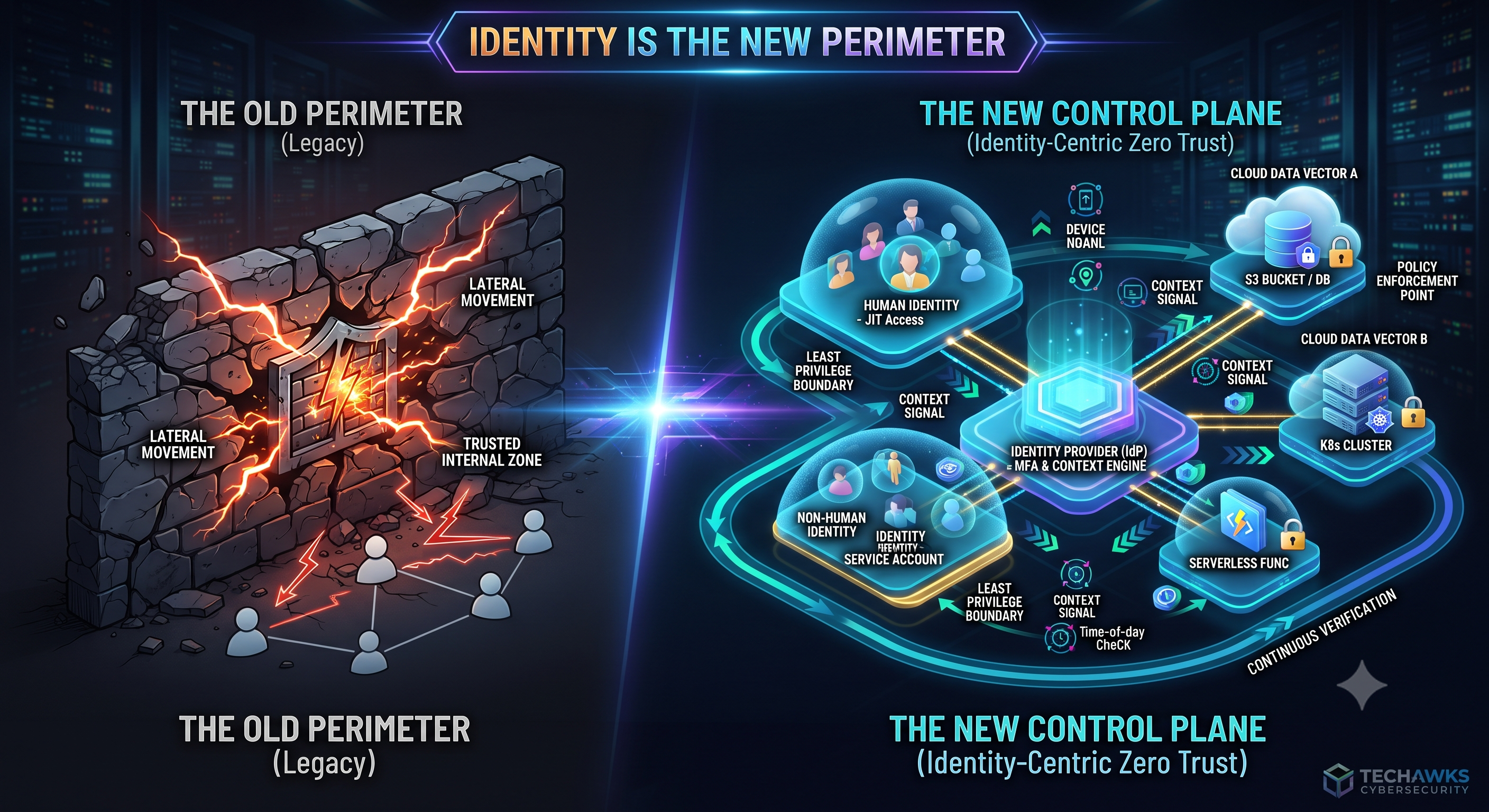 0 Comments 0 Shares 52 Views 0 Reviews
More Stories

 Arabic
 French
 Spanish
 Portuguese
 Deutsch
 Turkish
 Dutch
Dutch
 Italiano
 Russian
 Romaian
 Portuguese (Brazil)
 Greek
Greek